The thing itself
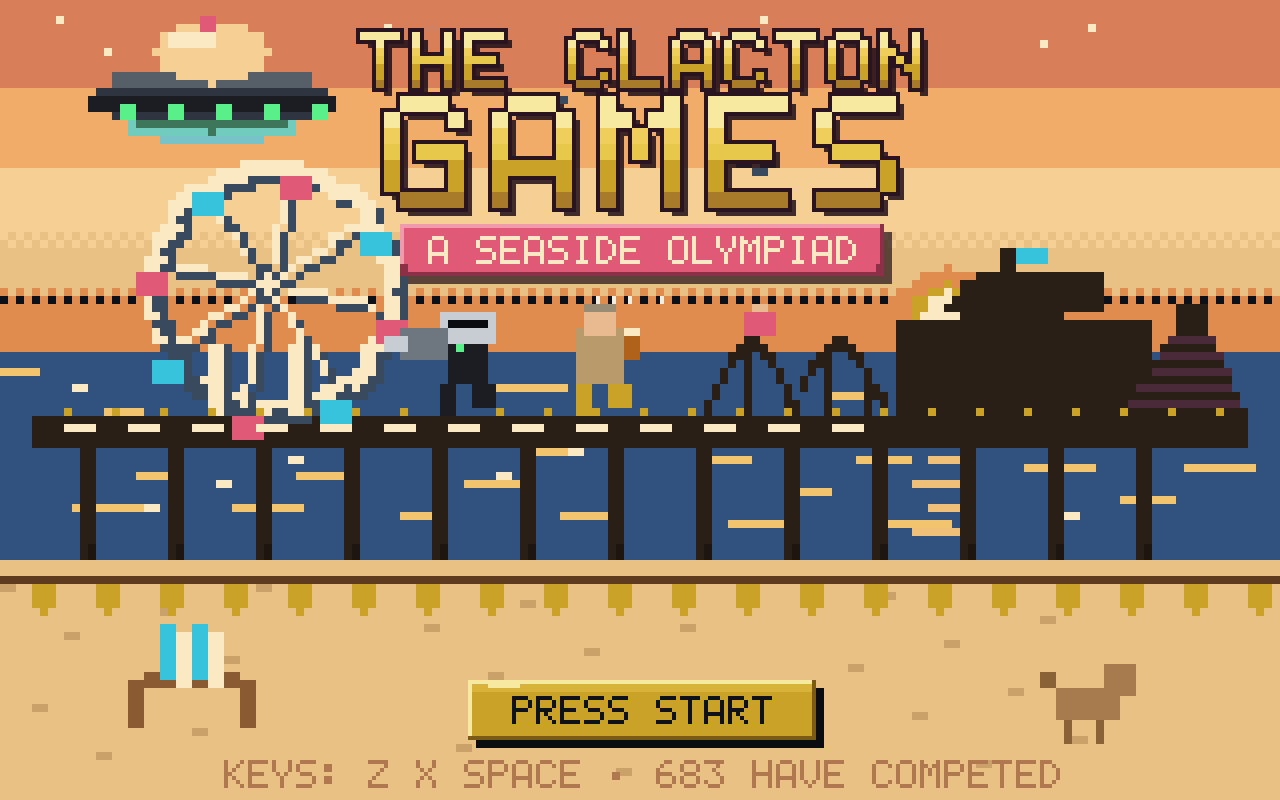
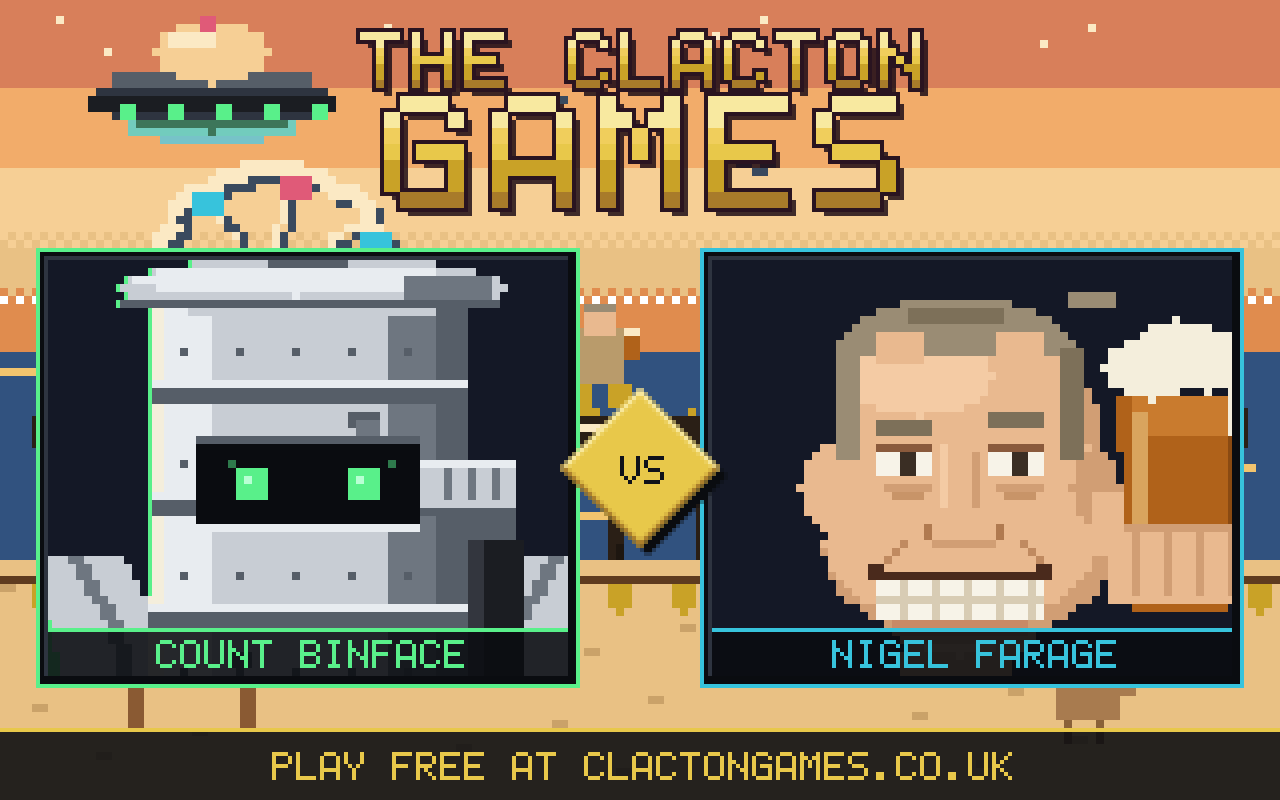
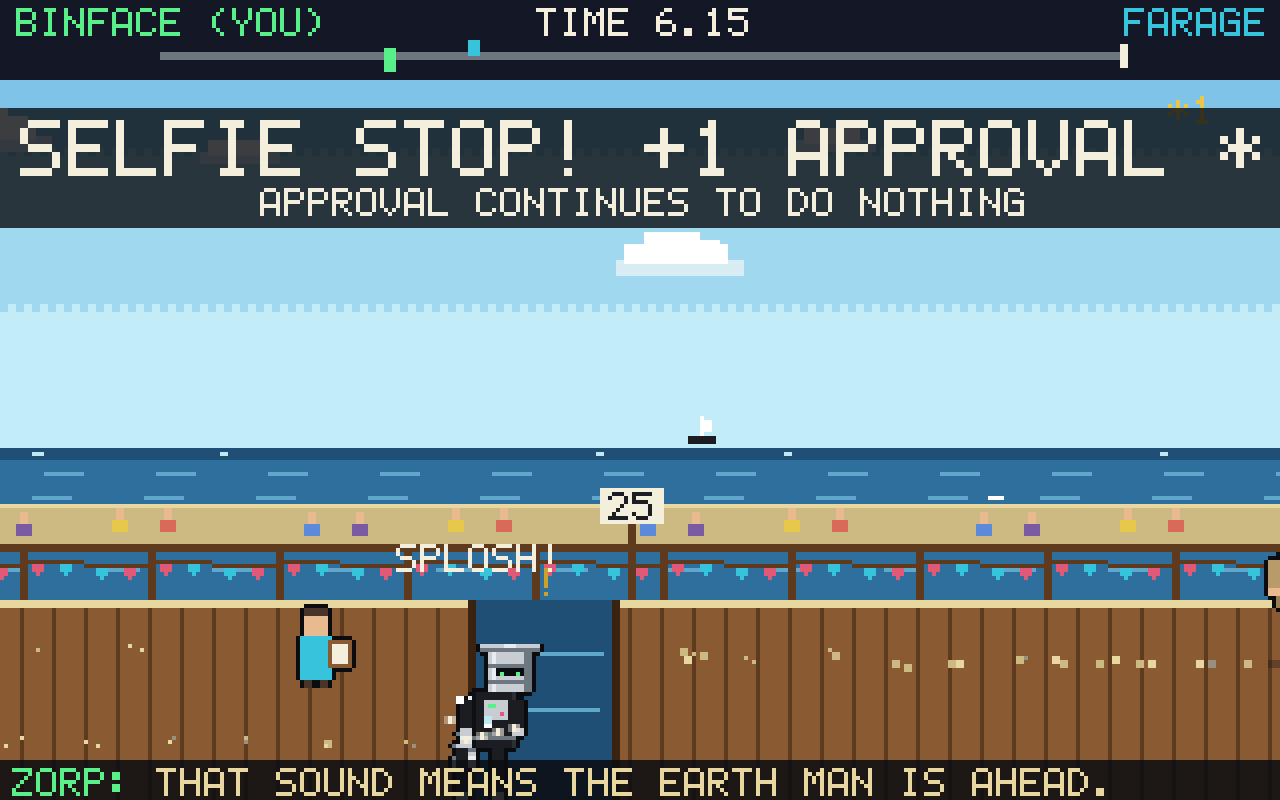
A free retro browser game for the 2026 Clacton by-election, in which Count Binface and Nigel Farage compete across five seaside events: the 100m Pier Sprint, Ballot Box Hurdles, the 99 Flake Scoop-Off, the Nomination Relay and the Zero-G Bin Put. Amiga-era chunky pixels, chip-tune bleeps and toggleable CRT scanlines. About 200KB in total, smaller than one photograph of the actual pier, written from scratch in TypeScript on the Canvas API with no engine. It plays one-handed on a phone in under five minutes.
It was a first game, made for the fun of it, by someone who builds web tools rather than games.
The part that was actually work
Anyone can put a game online. Getting anyone to look at it is a separate discipline.
Research before writing
Four audiences would plausibly care, and each wanted a different story: local press (a by-election story with the pier in it), national political desks (colour for a by-election, and a joke about exit polls), gaming press (a 200KB hand-written homage to Epyx Summer Games), and a courtesy note to Jon Harvey, whose character Count Binface appears as an affectionate original-pixel-art homage.
Within each outlet the target was a named journalist: the person who had covered the by-election or the quirky-internet beat, not a generic newsdesk address.
Materials that made saying yes easy
- A one-page facts sheet with every quotable detail pre-checked: what it is, what it costs, what it does not do, who made it, and the affiliation disclaimer.
- Seven images cleared for editorial use, at sizes a picture desk can drop straight in.
- A live JSON endpoint of the in-game “exit poll” numbers, so a journalist could quote a figure without emailing to ask for one.
- Four separately written pitches, so no outlet received a story shaped for somebody else.
Attach only two images and offer the rest. It keeps the inbox light, and it gives the journalist a reason to reply.
Sequencing
Local press went out first thing, with the courtesy note the same day. National and gaming followed the next morning, so the story was already out there by the time those desks looked at it. One journalist per email, sent individually, opening on a specific piece of their own recent work. A phone number in every message, because a journalist on deadline rings rather than types.
Even-handedness as a design rule
Both characters were given identical stats and the opponent was tuned so each wins roughly half the time. The game endorses nobody and encourages nobody to vote for anybody. That was a design decision before it was a press position, and it is the reason the story was safe for a local paper to run during an election.
The result
Picked up and published by the Clacton and Frinton Gazette with five images, the five event names, the exit-poll link and a closing invitation to both candidates. The paper reaches roughly 160,000 online readers a month.
What the materials actually did
The instructive part is how much of the published piece came straight from the facts sheet. The phrase “the world’s least scientific exit poll” ran verbatim. So did the specifics: free, no download, no registration, any browser, each event under 45 seconds, not affiliated with any party, candidate or campaign. The five event names were printed in the order the kit listed them.
A good facts sheet does not describe the story. It writes the paragraphs a journalist on deadline would otherwise have to construct, in language already checked for accuracy.
Quotes written to be liftable
The pitch offered lines that worked as printed quotes rather than marketing copy, and they were used as offered:
- “Every event features a real bit of the town — the pier and its big wheel, the Martello tower, the floral CLACTON sign on the greensward, even an air show flypast.”
- “The only thing I invented was Clacton Spaceport, and I maintain that’s only a planning application away.”
- “It’s scrupulously even-handed — both candidates have identical stats, both get equal ridicule, and each wins about half the time.”
The even-handedness line matters most. It is the sentence that let a local paper run a story about two named candidates during a live by-election without a balance problem.
The follow-on hook
The piece closes on an open invitation to both candidates to post their Pier Sprint times — “the seafront awaits”. That was deliberate: a story ending on an unanswered challenge to two public figures gives the paper a reason to come back to it, and gives anyone else covering the by-election a ready-made second beat.
A hobby project made in the evenings reached the audience it was actually about, because the outreach was treated as seriously as the build.